A Week of Outfits Built Around One Colour Anchor
Plan a week of outfits around one colour anchor already in your wardrobe, using contrast and repetition to make fresh combinations without buying more.
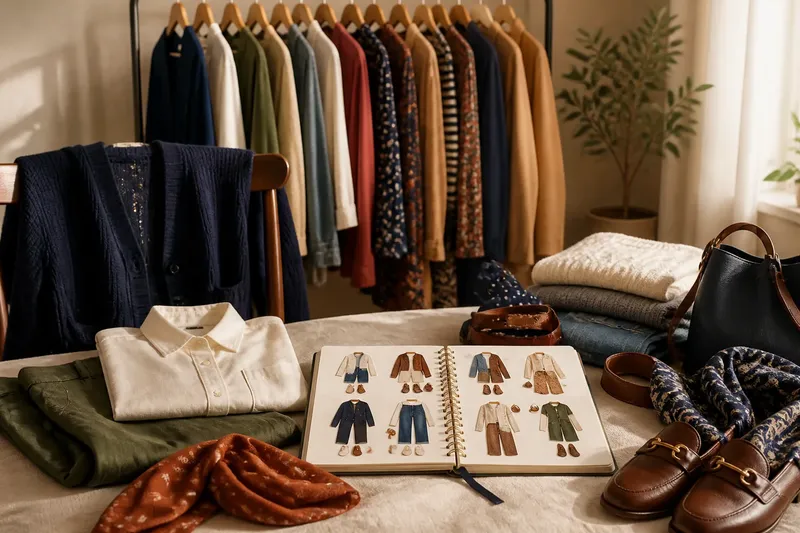
On Sunday evening, a navy cardigan rests across the back of a chair while a cream shirt and olive trousers wait nearby. Planning a week of outfits around one colour anchor starts with a shade already in your wardrobe, then uses contrast and repetition to connect pieces you own.
The anchor is not a uniform or a demand to wear the same item every day. It is a colour that gives the week a quiet thread. Navy might appear in a cardigan on Monday and a skirt on Thursday; rust might recur in a scarf, a patterned blouse, and a pair of socks. The point is to notice useful links before reaching for the shopping cart.
What counts as a colour anchor?
Choose one colour with several existing companions in your closet. It may be a neutral such as charcoal, cream, or brown, or a more vivid shade such as cobalt or green. A good candidate is not necessarily the colour you own most. It is the one that can meet different textures, tones, and levels of formality.
Look at the garments you actually wear. A colour may appear in a printed shirt, a coat lining, a belt, or the small pattern on a skirt. Those quieter appearances count. You do not need a collection of solid pieces in matching shades; slight differences often make an outfit feel considered rather than coordinated like a set.
Keep the exercise narrow. If you choose navy, do not also declare cream, tan, and silver as equal anchors. They can support the outfits, but navy is the thread you are following. That distinction makes it easier to see what you already have.
How do you choose the right anchor?
Start with the weather and commitments in the coming week. A lightweight colour that appears only in summer tops may not be useful during a chilly spell. A dressy shade might be awkward if most days involve errands or a casual workplace. Choose from the clothes that fit your actual calendar, not an imagined ideal week.
Pull a few possible anchor pieces onto a bed or chair. Include different kinds of garments if you can: perhaps a knit, a shirt, and a patterned accessory. Then look for colours already in your wardrobe that sit comfortably beside them. A cool blue may pair with gray, white, or burgundy; a warm brown could sit with denim, cream, or soft pink. These are prompts, not rules.
Check whether the anchor works near your face if it is a top or scarf, and whether it feels comfortable in the settings where you plan to wear it. If it is a colour you like but rarely choose, try it in a small, familiar combination rather than building a week around an unfamiliar statement piece.
What should you prepare before the week begins?
Set aside a short planning window and gather the anchor pieces, likely companions, and shoes you already wear. Check the forecast and your calendar. You do not need to assemble seven complete outfits in advance; a few choices and a backup are enough to reduce morning guesswork.
- Check the anchor: Note the colour and the garments or accessories where it appears. If it shows up in several pieces you can wear this week, keep it; otherwise, choose a colour with more available options.
- Check the week’s demands: Mark days that call for comfortable shoes, a polished layer, or clothes suited to a long commute. If a planned outfit misses one of those needs, swap in a more practical piece or assign the outfit to another day.
- Check contrast: Set out companions in light, dark, warm, or cool tones. If the outfit has a clear contrast through colour, texture, or print, keep the pairing; if it looks flat, try a different companion already in the closet.
- Check garment condition: Notice which items need pressing, have a missing button, or are unavailable because they are being washed. If an item is ready to wear, leave it in the plan; if not, substitute a sound piece or set the outfit aside.
- Check your fallback: Choose one combination that feels easy if a morning runs short. If it suits the day’s setting and feels comfortable, keep it as the backup; if not, select a simpler pairing that does.
- Check footwear: Put the intended shoes beside each outfit. If they suit the day’s walking and setting, keep them; if they do not, change the shoes or choose another outfit.
These notes are a small map, not a packing list. Keep them where you dress, or leave the selected pieces together so you can see the relationships.
How can the colour anchor shape each day?
Give each day a distinct role, rather than trying to make every outfit equally inventive. The anchor can be prominent once and nearly incidental another time. Repetition is useful because it lets the supporting pieces change without making the week feel disconnected.
Monday: Start with the easiest pairing
Use the anchor with a reliable neutral and familiar shoes. If navy is the anchor, a navy cardigan over a cream shirt with dark jeans is a straightforward opening. The aim is to learn how the pieces sit together before adding more contrast.
Tuesday: Change the texture
Keep the colour relationship but alter the surface. A smooth blue shirt can meet a nubby gray knit, or a soft brown skirt can sit beside crisp white cotton. Texture gives the eye something to notice while the palette stays calm.
Wednesday: Let a print carry the thread
Choose a print that contains the anchor rather than adding another solid piece in exactly the same shade. A small floral, stripe, or check can connect a plain jacket to trousers in a different colour. Keep the other garments simple if the print already has plenty to say.
Thursday: Repeat the anchor in a smaller dose
Wear the colour in a scarf, bag, belt, or socks while giving the rest of the outfit a different lead. This tests whether the anchor can function as a quiet link instead of the main feature. If the accessory feels tacked on, choose one that already belongs naturally with the outfit.
Friday: Use the strongest contrast
Pair the anchor with a light or dark companion that makes its character clearer. A deep green top might stand out against pale denim; a cream blouse can brighten charcoal trousers. Keep comfort and the day’s setting in view, so contrast does not become a costume.
Saturday and Sunday: Reuse what earned its place
Repeat a combination that felt good, or borrow one element from an outfit that did not quite work. Weekend clothes do not need a special palette. The point is to find out whether the anchor travels easily into less structured days.
What if the planned outfit does not work?
Change one relationship at a time. If two colours feel muddy together, keep the anchor and swap the companion for a lighter or darker piece. If the outfit feels too busy, remove a printed layer or reduce the number of accessories. If it feels flat, try a different texture or introduce a small contrasting colour already in the closet.
Imagine you choose rust as the anchor, with a rust blouse, a patterned scarf, and brown shoes already on hand. On Tuesday, the blouse looks too warm beside a brown skirt. Keep the blouse, switch to dark denim, and use a cream cardigan to create a clearer break. The expected visible result is a more distinct outline between the warm top and the darker bottom, without adding anything new.
Sometimes the issue is not colour. A garment may pull, feel wrong for the weather, or need attention before it is comfortable to wear. Set it aside rather than forcing the outfit to work. A planning exercise should help you use your clothes, not persuade you to tolerate an uncomfortable one.
How do you know whether the week helped?
At the end of the week, notice which combinations you reached for willingly and which ones needed too much negotiation. You might discover that the anchor works best as an outer layer, that a certain print makes it easier to pair with other colours, or that one supposedly versatile piece rarely suits your real routine.
Make a brief note of those observations. Keep it specific: “olive trousers work with cream and denim” is more useful than “need more basics.” If you spot a gap, first consider whether another garment already fills that role in a different colour or texture.
Can you adapt a week of outfits around one colour anchor?
Yes. Keep the same anchor colour as a thread across the week, but vary the garment, texture, print, and contrast. A print can carry that thread just as well as a solid, provided you identify the recurring shade and echo it in other pieces.
Can the anchor be a print rather than a solid?
Yes. Choose one colour that recurs in the print and treat that shade as the anchor for the week. Let the print appear on one day and echo its colour through quieter garments or accessories on others.
What if the same anchor piece feels repetitive?
Use the colour in different forms: a garment one day, a printed detail or accessory another. You can also repeat the same piece with a changed layer or texture, while keeping the rest of the outfit comfortable and appropriate for the day.
Can two colours share the anchor role?
For this exercise, choosing one keeps the pattern easy to read. A second colour can act as a companion, but if both are treated as anchors, it becomes harder to see which existing pieces are doing the connecting.
What if I own very little in the chosen colour?
Start with the one item you have and look for colours already nearby in your wardrobe that support it. If there are too few useful combinations, choose another existing colour for this week and return to the first when you have more suitable companions.
What can one colour anchor teach you?
A week built around one colour anchor is less about perfect coordination than attention. Repeated use can reveal which shades already bridge separate parts of a wardrobe, and which clothes only seem versatile when considered alone. It can also make an overlooked piece easier to wear because you have a clear place to begin.
Keep the useful combinations in mind, but do not turn them into rules. Next week may bring different weather, plans, or energy. The most helpful result is knowing a few fresh ways to wear what is already yours, without mistaking a shopping trip for the only way to change the view.