The Outfit Formula: Why Repeating a Few Shapes Can Make Getting Dressed Easier
Outfit formulas make getting dressed easier by giving familiar silhouettes a clear starting point, with room to vary colour, layers and accessories.

You are standing by the closet with a clean shirt in one hand and no clear idea what belongs with it. Outfit formulas can make that moment quieter: a few familiar arrangements give you a starting point, while colour, layers and accessories keep the result from feeling uniform.
A formula is not a uniform or a strict set of pieces. It is a recurring shape, such as a close-fitting top with a full skirt, or a soft layer over a straight trouser. The point is to repeat the relationship between garments, not necessarily the garments themselves.
1. What makes an outfit formula useful?
A useful formula has a recognizable structure and leaves at least one choice open. “Shirt, straight trousers, and a third layer” is a structure; the shirt, trousers and layer can change with weather, occasion or mood. By deciding the arrangement in advance, you avoid having to invent an entire outfit each morning.
Start by noticing combinations you already reach for. Look for recurring proportions rather than favorite colors: perhaps you often pair a shorter top with a high-rise bottom, or balance wide-leg trousers with a neat knit. These repetitions point to a shape that already feels natural on you.
Keep the formula broad enough to accommodate different pieces. If it depends on one exact jacket, it is more of a uniform than a flexible structure. A good formula still works when one item is in the laundry or the temperature changes.
2. Which shapes are easy to repeat?
Choose structures that suit your routine and the clothes you own. These are starting points, not rules about body type or what anyone should wear:
- Close top, relaxed bottom: a fine-gauge sweater or tucked-in tee with wide-leg trousers or a flowing skirt.
- Relaxed top, narrow bottom: an open-collar shirt or roomy cardigan with straight jeans or slim trousers.
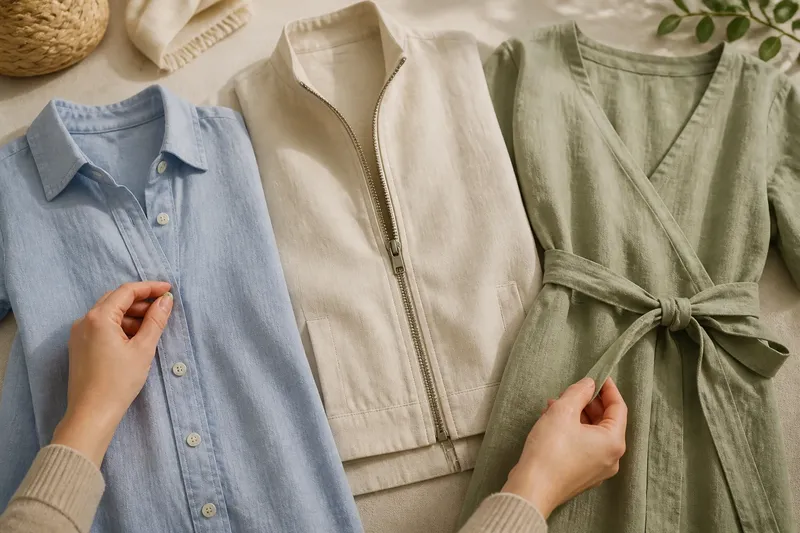
- One-piece base, open layer: a simple dress with a shirt, cardigan or jacket worn over it.
- Long layer, simple base: a duster cardigan or unbuttoned overshirt over a plain top and uncomplicated bottoms.
- Matched separates, contrasting texture: a knit top with tailored trousers, or a crisp shirt with a soft skirt.
Each shape makes one proportion decision for you. You can then spend attention on whether the pieces feel appropriate and comfortable, instead of reconsidering every possible silhouette.
3. How can a familiar shape still feel different?
Change one or two elements while keeping the underlying arrangement. Colour is an easy variation: a neutral base can take a vivid scarf, while the same structure in tonal shades can feel quieter. Texture also shifts the effect. A cotton shirt and wool trousers read differently from a silky blouse and denim, even if both follow the close-top, relaxed-bottom shape.
Layers can change the outline as well as the warmth. A cropped jacket emphasizes the waist; a longer open cardigan creates a vertical line. Accessories bring another adjustment without requiring a new outfit plan: a leather belt, a patterned neck scarf, or a different shoe can alter the mood of familiar pieces.
Say you have a formula built around a simple dress and an open layer. On a cool morning, you might choose a wool cardigan and ankle boots; for a milder afternoon, an unbuttoned cotton shirt and loafers. The expected visible change is a different outline and level of warmth, while the same basic arrangement remains intact.
Pick a variation that solves a real need, such as warmth, movement or a more polished setting. That keeps novelty from becoming another decision burden.
4. How do you know a formula fits your actual day?
A pleasing silhouette can still be inconvenient if it asks for constant adjustment. Consider the day’s ordinary demands: sitting at a desk, walking between places, carrying a bag, or spending time outdoors. A tucked shirt that comes loose whenever you reach for something may be less useful than a shorter cut worn untucked.
Comfort includes fabric behavior and care, not just fit. A linen layer that wrinkles easily may suit a relaxed routine but feel distracting in a setting where you prefer a crisp appearance. A knit that catches on a bag strap may be better reserved for days when you are carrying something else.
Try the whole arrangement at home and move as you normally would. Sit, reach, and walk a little. If a sleeve slips, a waistband pinches, or a layer bunches under a coat, adjust the formula rather than blaming yourself for wearing it incorrectly.
5. How can you build a small rotation without buying more?
Use what is already in your closet. Choose a small handful of tops, bottoms and layers that work together, then map them onto two or three formulas. Keep the combinations visible in your mind, or jot them on a note in your closet; there is no need to create a complicated wardrobe system.
Notice the missing role, if there is one. Perhaps every top in a formula is delicate, or the only layer feels too warm indoors. That observation can guide a future purchase more clearly than a vague feeling that you need “more options.” First check whether another item you own can fill the role.
A rotation should support repetition, not demand that every item coordinate with everything else. A few reliable combinations are enough to make mornings easier. Keep the formulas that serve your real routine, and let the rest stay suggestions.
What questions come up when using outfit formulas?
Do outfit formulas make clothes look repetitive?
They can if every element stays fixed, but a formula repeats a silhouette rather than a complete outfit. Switch a color, texture, layer or accessory while keeping the same basic arrangement.
How many outfit formulas should I start with?
Begin with two or three shapes you already wear comfortably. Add another only when your routine or closet reveals a genuine need for a different arrangement.
Can one formula work across seasons?
Often, if its structure allows for a layer or a change in fabric weight. A dress-and-open-layer formula, for instance, can use a light overshirt in warm weather and a cardigan beneath a coat when it is cold.
What if the same silhouette does not suit every occasion?
Keep more than one formula for different settings, such as a relaxed shape for errands and a sharper one for work. The goal is to reduce unnecessary choices, not to make one arrangement serve every part of your life.
Outfit formulas work best as a quiet prompt, not a prescription. The useful question is whether the shape makes choosing easier on an ordinary morning. If it does, keep it in rotation; if it keeps asking for adjustments, revise the arrangement until it belongs to your life.