The Care-Label Myth: Why One Symbol Is Not a Complete Washing Plan
A care-label symbol is only part of a washing plan. Learn to read the full label alongside fabric, construction, and the garment’s condition.
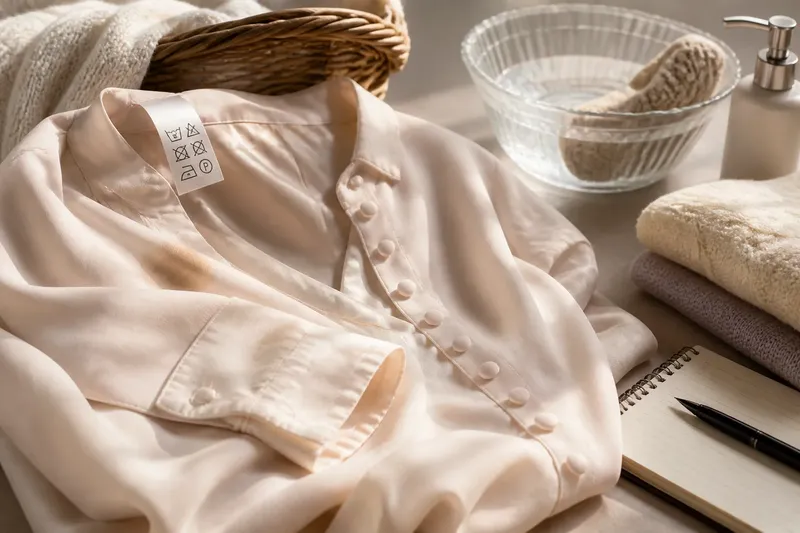
You find a blouse in the laundry basket with a wash tub symbol on its tag, but the blouse has a slippery lining, a row of covered buttons, and a stain near the cuff. The care-label symbol tells you something, but not everything you need to decide what to do next. A care-label symbol is one part of a washing plan; the rest comes from reading the label as a whole and considering the garment in front of you.
That distinction matters because a symbol can be easy to spot and easy to overread. A tub may suggest washing, but it does not tell you to ignore a separate drying instruction or assume that every layer will behave alike. Treat the tag as a set of connected directions, then choose among three sensible approaches: follow the full label at home, use a gentler home routine when the directions allow it, or seek professional care when the garment’s materials and construction make home cleaning a poor fit.
What does a care-label symbol actually tell you?
A care symbol communicates one kind of treatment, not the entire sequence. Depending on the label, you may see directions for washing, bleaching, drying, ironing, or professional cleaning. The symbols and any accompanying words belong together. A washing instruction does not cancel out an instruction about heat, and a drying direction does not tell you what detergent or spot treatment is suitable.
Read every part of the tag before making a choice. Look for written qualifiers such as “hand wash” or “do not wring,” as well as symbols that add limits. Some labels give a clear restriction; others offer a permitted method. Knowing that distinction helps you avoid turning a narrow instruction into a broad permission.
The label also describes care for the garment as designed, while your garment may have changed since it was made. A loose seam, a missing bead, or a fragile-looking lining can make the least demanding permitted method more sensible than the more convenient one. If the label, manufacturer’s directions, or local rules bear on the choice, follow the relevant instruction rather than guessing.
Read across the whole label before you reach for the detergent.
Which approach fits your garment?
There is no single best routine for every piece of clothing. The choice depends on what the tag permits, what the garment is made from, how it is built, and what condition it is in. These three approaches offer a useful comparison without treating any one symbol as a complete plan.
Follow the full label at home
This is the clearest option when the label gives home-care directions and the garment is in sound condition. Follow the washing and drying directions as a pair. If the tag allows machine washing, pay attention to any stated cycle or temperature guidance rather than assuming that a standard setting suits every item.
This approach tends to suit sturdy everyday garments with uncomplicated construction: for example, a simple cotton shirt with intact seams and no special trim. Before washing, close fasteners, check pockets, and separate the item according to the label’s directions. Those small preparations do not replace the label; they help the garment meet the permitted treatment in a less chaotic load.
Choose a gentler home routine where permitted
A gentler option can suit a garment that is washable but has delicate details, a loose weave, or a finish you would rather not stress. Depending on what the label allows, that may mean hand washing, using a mild detergent, or choosing a gentle cycle and a mesh laundry bag. Avoid assuming that “gentler” means every method is safe: soaking, rubbing, or twisting can still affect some fabrics and trims.
This approach can be useful for a blouse with a delicate surface or a knit whose shape you want to preserve. Keep the treatment modest, and avoid adding stain removers or fabric treatments unless they are suitable for the garment. If you are uncertain about a product, check its directions and test only where the product instructions permit; a hidden area may not represent every material or color on the garment.
Use professional care for a complicated piece
Professional cleaning may be the more suitable choice when the label calls for it or when the garment combines materials and details that are difficult to treat at home. Structured jackets, lined dresses, beaded garments, and pieces with an uncertain finish can be harder to clean evenly than a plain shirt. A cleaner can also assess a stain or construction issue before choosing a treatment.
This option suits clothing whose shape, trim, or layered construction makes home washing a concern, as well as garments with care directions that call for professional treatment. Tell the cleaner what caused the stain if you know, and point out loose buttons, weak seams, or areas that have already changed. That information can help them decide what to attempt and explain any limitations.
How do fabric, construction, and condition change the choice?
Fabric is only the beginning. Two garments made from similar cloth can respond differently because one is unlined and relaxed while the other has a shaped collar, fused panels, or decorative edging. Construction determines how parts are joined and how they may react when the outer fabric and inner layers are cleaned or dried.
Check for more than the main body fabric. Look at the lining, interfacings, shoulder pads, trims, prints, and applied decorations. A label may describe a garment’s general care, but a delicate trim or contrasting panel can be the part that sets the practical limit. Look especially at places where materials meet: hems, cuffs, collars, and seams can show signs of wear before the fabric does.
Condition matters too. A care method that was reasonable when a garment was new may be less appropriate after its seams have weakened or its color has begun to fade. Before cleaning, inspect the item in good light. Note stains, loose threads, missing embellishments, and areas that feel brittle or stretched. If the piece is damaged, cleaning may make the damage more visible, so repair or professional advice may be sensible before washing.
Imagine a lined skirt whose tag permits a home wash, but whose hem has a loose seam and whose lining twists at the side. You notice both before laundering, so you set the skirt aside rather than putting it into a mixed load. After a tailor secures the hem, you reread the full label and choose the permitted gentle option, keeping the skirt separate so the layers are easier to monitor. The observable result to look for is a skirt that comes through cleaning with its hem and lining still sitting as expected—not a promise that every fabric will respond identically.
What should you check before choosing a wash method?
These questions help turn the tag into a decision rather than a reflex. They are especially useful when a garment looks simple at first glance but has several layers or details.
Does the full label allow home washing?
Read the washing, drying, and ironing directions together, including any written limitations. If the label directs professional care, do not treat a washing symbol elsewhere as permission to disregard that direction.
Are there materials or details that may need separate care?
Inspect linings, trims, coatings, prints, buttons, and decorative pieces, not only the main fabric. If a component appears delicate or is already coming loose, choose a more cautious permitted approach or ask a professional.
Is the garment in good enough condition to clean?
Look for weak seams, holes, fading, stretched areas, or old stains before putting the item into water. Repairing or assessing a problem first can help you avoid making an existing issue harder to address.
What will happen after washing?
Check the drying direction before you start, since a suitable wash method can still be followed by an unsuitable drying choice. Consider where the garment can dry without being crushed, stretched, or exposed to a heat source that the label does not allow.
How do you make the final choice without overreading the tag?
Start with the label’s full set of directions. Next, compare those directions with the garment’s construction and present condition. If home care is permitted and the item is straightforward, follow the tag. If the garment is washable but unusually delicate, choose a gentler permitted method. If the label or construction points away from home cleaning, use professional care or ask the maker or a qualified cleaner for guidance.
Do not let a familiar symbol decide the question by itself. A wash tub can answer whether washing is part of the care plan, while the rest of the tag and the garment itself shape how that care should happen. When you pause over a care-label symbol, the useful question is not simply “Can this be washed?” but “What does this whole garment need, and which permitted option best suits it?”
That is the practical value of reading the care label as a complete plan: you make a choice based on the item you own, not on one symbol detached from the fabric, seams, lining, and finish. Keep the tag with the garment, note any existing damage before cleaning, and choose the least complicated method that the full directions and the item’s condition support.